
Episode 126: How to Grow Your Business Without Being Pushy with Chris Bird
Chris Bird
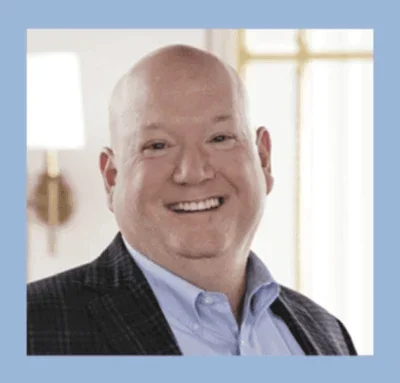
About Chris Bird
Chris Bird is the General Manager of Saybrook Point Resort & Marina, a luxury waterfront resort in Old Saybrook, Connecticut. With more than 15 years of experience managing luxury hotels and spas, Chris is responsible for the resort’s daily operations, sales, and marketing. His hospitality background includes leadership experience with Canyon Ranch and Nemacolin.
At Saybrook Point, Chris leads with a service-first philosophy centered on connection, integrity, team empowerment, and community involvement. He believes strong leaders hire the right people, give them the training and tools they need, and trust them to take ownership of the guest experience.
Chris also takes an active role in business development, vendor relationships, community partnerships, employee development, and creating experiences that encourage guests and clients to return.
Saybrook Point’s current official website confirms that Chris remains General Manager and is responsible for its operations, sales, and marketing. The resort’s official profile also notes his previous experience with Canyon Ranch and Nemacolin. His leadership philosophy and approach to empowering employees are discussed throughout the episode.
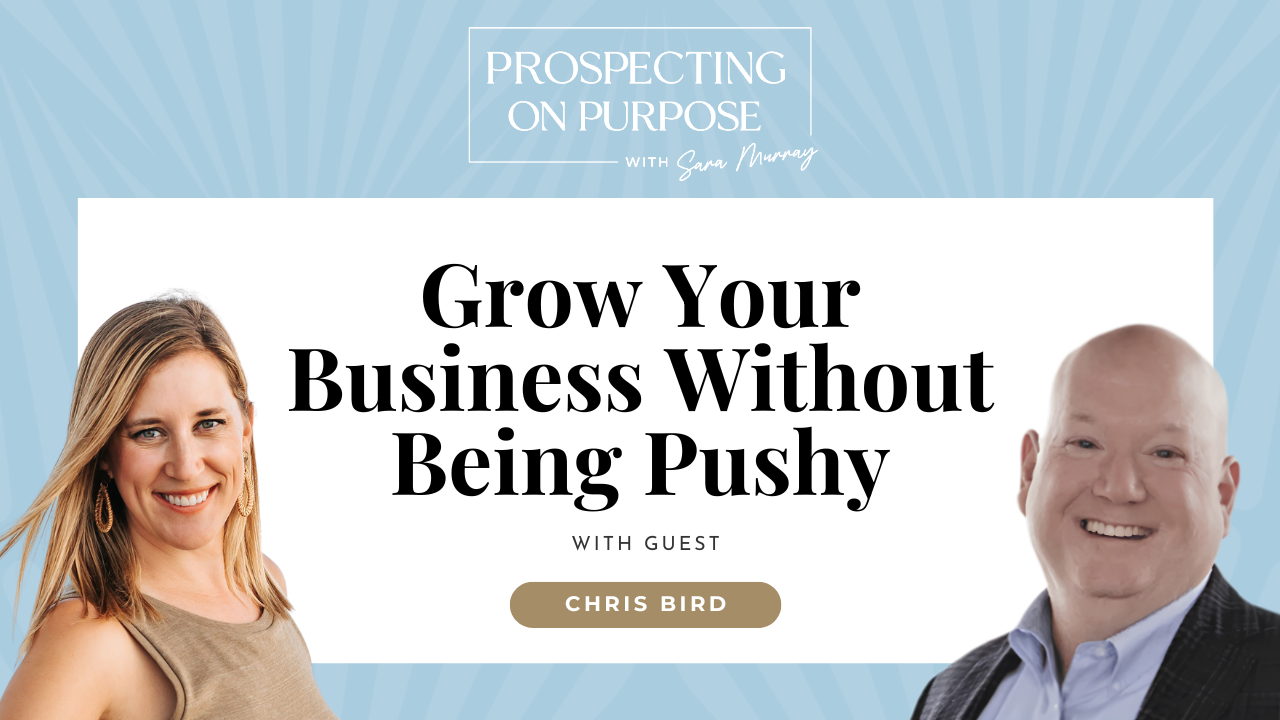
Watch the episode here
What if growing your business had less to do with pushing for the sale and more to do with serving people well?
In this episode of Prospecting On Purpose®, Sara Murray speaks with Chris Bird, General Manager of Saybrook Point Resort & Marina, about how service, integrity, community involvement, and thoughtful follow-up create sustainable business growth.
Chris shares how he empowers his team, turns daily stand-up meetings into opportunities for collaboration, builds reciprocal relationships with vendors, and uses CRM follow-up to turn past events into future business. He also explains why effective prospecting means meeting buyers where they are, respecting how they prefer to communicate, and making it easy for them to say yes.
From an “open floor” leadership philosophy to running at problems instead of hiding from them, this conversation shows how caring for employees, customers, vendors, and the surrounding community can become a powerful sales strategy.
The result is a practical reminder that you can grow your business without being pushy when you lead with service and follow through with integrity.
Chris explains how vendor partnerships, community involvement, event follow-up, and relationship tracking can create repeat business without relying on aggressive sales tactics. He also emphasizes communicating according to the buyer’s preferences and following up consistently.
Sara Murray - Prospecting On Purpose®
Chris Bird is the general manager of Saybrook Point Resort & Marina, a luxury waterfront resort in Old Saybrook, Connecticut, where the Connecticut River meets Long Island Sound. He oversees nearly every part of the family-owned property, including the hotel, guest houses, villas, lighthouse suite, award-winning Fresh Salt restaurant, full-service spa, deep-water marina, wedding and events business, and the only butler service in Connecticut, which I am sure we are going to discuss.
With a background in accounting and hospitality leadership, Chris runs the resort more like a CEO than a manager. He hires strong people, develops them, and trusts them to run their corners of the business. I have had the benefit of meeting Chris a couple of times, and we have had some powerful sales conversations. He brings such an interesting perspective through his role as a general manager.
I am very excited to dive into our discussion. Chris, welcome to Prospecting On Purpose®.
Chris Bird
Thank you so much. It is such a pleasure to team up with you again.
Sara Murray - Prospecting On Purpose®
Likewise. To help orient our audience, could you paint a picture of what you actually do? What does the general manager of a large hotel like yours do?
Chris Bird
It is really about connection, whether that means connecting with guests or connecting with the team. I look at myself as a tool for every staff member. My philosophy is to hire the right people, give them the skills, training, and tools they need, and then stay out of their way.
We hire for personality. I am like a free safety, walking around, connecting with people, and making sure everything is okay. When something urgent happens, you jump into action, but you are also watching for gaps and looking for ways to fill them. That takes a whole team. Sometimes we have 240 hotel guests, plus wedding guests, members, and restaurant guests. We may have 850 people on the property at one time, and no individual or group of 10 people can handle all of that alone.
We have to work together and keep looking for opportunities to help.
Sara Murray - Prospecting On Purpose®
As I have met more general managers, that seems to be a common thread. The role is really about leadership and empowering people to do what is best for the guest and the hotel. When I think of a general manager, it is almost like being the mayor of your own little city, with all these different departments operating at once. Is that accurate?
Chris Bird
I had never thought of it that way, but that is perfect. The question is how you bring all those departments together so the guest experience flows better and so people can share ideas. Something that works in the banquet department may also help the spa director.
They may seem like two completely different areas, but they are both operations. How can we work together to improve each other's ability to serve guests?
Sara Murray - Prospecting On Purpose®
I think about the parallels with other industries too, Chris. You may have sales, marketing, engineering, and project management. If those people do not talk to each other, things break down, and the customer or guest is the one who suffers.
How do you empower your leaders to come together, collaborate, and communicate?
Chris Bird
Honestly, the first and easiest response is, "I am sorry." The second somebody says, "I should have known this information," or, "This was not shared with me," I want to know that. I have to be vulnerable. Then we can look at how to get them the information they need, because that is ultimately my responsibility.
My first reaction is, "I am so sorry. How do we get you the information you need?" One thing we do every day is a stand-up meeting.
When I arrived, it was very much, "This is what I am doing today." That is lunchroom talk. We can talk all day about what we are doing.
Instead, we talk about how we can work together. Not just, "What are you doing?" but, "What are you doing for others, and what do you need from others?"
It changes the dynamic when the restaurant manager walks in and, instead of simply reporting the number of reservations, says, "I saw that sales has a site visit today. Can you tell me more about where the guest is coming from and whether there are any food allergies?"
It is completely different.
It empowers each leader. I cannot do everything, and I will never pretend that I can. All I can do is empower people to run their areas of the business and reach out to others who can help them succeed.
Sara Murray - Prospecting On Purpose®
You said a couple of powerful things. When you come together, you are not just talking about day-to-day tasks. You are asking, "What do you need from others, and what can I do for you?" I frame that as offers and asks.
Each person offers something they can contribute and identifies what they need in return. It creates a very different kind of connection and collaboration when you approach it from a place of giving and adding value. I also want to explore your idea that the leader is a tool for empowering the team.
You are the tool that helps empower your team.
Are you also a tool for the guests? Can you share a couple of examples?
Chris Bird
Absolutely. For me, it is about being a security blanket. I have worked at very small, high-end luxury properties charging twelve to fifteen hundred dollars a day per person. In that environment, guests want a personal connection with the general manager.
At Saybrook Point, it is about the associates. It is not about me. It is about the team and the ownership. In that sense, the general manager is not the star. But I am a security blanket. Guests know there is a general manager, that they can speak with a manager at any time, and that they can reach me when I am on the property or through the website.
It has always been important to me that my contact information is available on the website. That way, anyone can reach me if they need to. This role is a great fit because, when you have a front-desk associate who has been here for 30 years, he does not need the general manager to be the personality of the property.
He is the star of the show, not me.
Sara Murray - Prospecting On Purpose®
It is interesting that you put your email and contact information front and center. I have been interviewing general managers for a presentation to the New England Inns and Resorts Association. Sometimes I walk into a property and ask for the general manager's card.
I am not trying to sell anything. I am trying to add value.
There have been a handful of times when someone refused to give me the general manager's contact information.
Other times, the response is, "Of course. Send him a note." I understand why some people guard that information.
I am also assuming, Chris, that you get a lot of people trying to sell you things. Is that correct?
Chris Bird
Yes, but I have empowered the team to ask questions. They are protective of me and my time, but when they see that someone is a genuine guest, the response is usually, "Here is his card. Let me see if he is available."
That is better.
Let us talk about it. Very often, when an associate comes to get me, they already know the story and where I need to meet the guest. That is helpful. Whether the guest wants to praise the team, discuss something we can improve, or talk about sales, I usually know what I am walking into. That makes it easier to be fully present.
Sara Murray - Prospecting On Purpose®
In your role, you are empowering your teams, but I believe the general manager is also responsible for high-profile relationships and generating business for the hotel. Most people think of a hotel as guest rooms and public areas.
They do not always think of it as a business that has to generate revenue and win new customers. What is your role in the sales process, and how do you bring new and creative business into the hotel?
Chris Bird
There are a couple of ways. First, you have to get out into the community. I was fortunate to join a property four and a half years ago that has a long history, dating back to 1989, along with a phenomenal following and reputation. From the founders to their children, who own it now, the ownership has always been very generous with the town and the community.
As a general manager, one luxury I have is a generator for the entire property. Because we are right on the shore, losing power could be a major issue. But the generator was not installed simply to make the general manager's job easier.
It was installed so the town would have somewhere to go during storms. During Superstorm Sandy, we were down for a day and a half, but then the restaurant and hotel were fully open because of the backup generator. It is about being creative and making sure people know you are a resource.
It comes back to service. How can I help the chamber, the lodging association, the town, or a local event? Creating events for our guests that also serve the town is huge. Promoting events and restaurants that have nothing to do with our business can generate longer stays and help guests become more involved and interested in Saybrook Point.
Sara Murray - Prospecting On Purpose®
That is a great example because it has several elements. One is having the hotel serve as both a pillar of the community and an active part of the community.
I also like the point about promoting other restaurants. It helps those restaurants, but it can also encourage visitors to extend their stay so they can experience more of Old Saybrook.
It is a give-and-take relationship. You help the restaurant, and it helps you. There is a B2B element here, Chris.
There is also a B2C relationship with individual guests. That is one of the things I find compelling about the hotel business. You have a significant mix of B2B and B2C business.
Tell us about the B2B business you are prospecting for, and then we can get into the individual guests.
Chris Bird
We are finishing a beautiful renovation and spending quite a bit of money. One thing we are seeing is that some of the vendors we support are also coming here and spending their money. That appreciation is part of the partnership.
We recently needed some construction work, so an excavation company came out through another partner. The next day, the excavation company called and said, "I want to have my holiday party there." It came completely out of the blue.
You gave me business, and I want to give you business.
That is how we operate. We expect and look for that reciprocity, and we ask how we can help our vendors and the wider community. A rising tide lifts all boats. When everyone is looking for ways to make the stay, spa visit, restaurant visit, or overall experience better, everyone benefits.
Sara Murray - Prospecting On Purpose®
I like that perspective because I have always been on the vendor side, selling to developers, brands, and properties directly. Sometimes vendors feel insecure, as though they are bothering the buyer or the relationship is not as strong as it really is.
I have gotten past some of that because I have saved the day many times at hotels. I understand my value before the buyer necessarily sees it, and that has made me more confident when reaching out cold or trying to sell to someone in a role like yours.
What I like about your point is that it is a true partnership. Whether you are the client, buyer, or seller, you need each other to move business forward. Your examples may help vendors feel more confident about reaching out and about how they show up in the partnership.
Chris Bird
It is about making yourself available and not shutting the door on sales outreach. For example, I probably receive 10 emails and 12 phone calls every month about new property-management software.
I am not interested, and I am not going to buy it. But that does not mean I have to hang up on someone. I can say, "We have invested a lot in our current system, and we are very happy. Please send me an email, and I will reach out if I need something." You have to put yourself on the other side and consider how you would want to be treated.
Leave the door open for the future, but make sure the salesperson knows you heard them. Otherwise, a good salesperson will keep calling. Be clear that you are not making a change right now.
Acknowledge that they are available if you need them. There is also nothing wrong with having four, five, or six potential vendors in reserve. If your first choice is too busy, you have not burned every other bridge.
Sara Murray - Prospecting On Purpose®
That is a great point about diversifying. You cannot put all your eggs in one basket because you never know what might happen to a vendor. Technology may change, AI may turn everything on its head, or there could be another pandemic. You never know.
Being open to receiving is important. I once tried to sell to the office of Frank Gehry, the world-famous architect. You can imagine that getting into that office was like Fort Knox. I gave my pitch, and the person told me, "The construction is too far along. It is fully baked. We do not need you, but feel free to send me an email." So I did. A couple of months later, they emailed and asked whether I could assure them that a third-party competitor's product would work.
I said, "I cannot guarantee that because it is not my product, but let me know if you need any help." A couple of months later, they encountered severe limitations during construction and came back to ask, "Can you fix it?" We did, and I ended up getting an entire museum specified with our product because both parties had remained polite and respectful.
Chris Bird
That is what it takes. We all need each other.
Sara Murray - Prospecting On Purpose®
Without naming names, have you ever been offended by a sales outreach? What is a major mistake people should avoid?
Chris Bird
My biggest request is, "Send me an email." Then I have all the information and can read it on my own time. The problem is when someone pushes a blind phone call too far instead of respecting my time.
I say, "I am going to review this on my own time, and the easiest way is for you to send me an email." Nine times out of 10, they respond, "Great. Is there a time when I can follow up?" Perfect. Give me a month and a half, a day, or four days, whatever makes sense.
Sometimes they have me hook, line, and sinker on the phone because they are offering something I need. It is about understanding where people are and meeting them there.
Sara Murray - Prospecting On Purpose®
I like that, especially the listening piece. Active listening is a skill many people struggle with, and it is something we all need to practice. Listening is what changes the game and differentiates you.
I want to go deeper into the vendor piece because this applies to many industries. There is nothing wrong with asking your vendors to spend money with you when it is an appropriate partnership. What are some examples or starting points for someone who has never thought about pursuing vendors as potential customers?
Chris Bird
I use a soft-sell approach. At the end of the year, I run the 1099 report to see who we have paid, then send a letter saying, "We have appreciated the partnership. Please let us know if there is anything we can do for you, including gift cards." I give them several options because not every option fits every business.
A vendor may be located two and a half hours away, so holding an event here may not make sense. But gift cards for employees to spend a day at the spa or stay overnight could be a great fit. For others, a holiday party makes sense. People understand and appreciate that connection.
We know who our top payees are, and it really is a partnership. Recently, I was ready to bring in a new bourbon or spirit. The salesperson told me, "The owner will be here within two weeks to spend $300 in your restaurant."
I said, "That is great. That is how we like to work." It was not the reason I had already decided to say yes, but the salesperson understood the value of showing up. We also created an event called Oysters at the Point and asked vendors to support the Rockfall Foundation. Over the past three years, we have raised more than $65,000 for the foundation.
We told vendors, "This is a cause we support. We want to host a wonderful oyster festival, and we would like you to pour or showcase your products for our guests and the public." It has been fantastic. They understand that it is about relationship-building.
Sara Murray - Prospecting On Purpose®
That is a win-win-win. The hotel can execute a great event and support a cause. The nonprofit benefits. The vendor gains exposure to your guests. One thing I find inspiring about hospitality is that you have to be creative to generate business.
Many listeners may not think about a hotel having to generate inbound business because they do not work in that world.
Another concept I have learned from you is being there for families and building a pipeline around social events. Can you explain that?
Chris Bird
It is about building a pipeline. You may host someone's 65th birthday, while another person who is closely involved is turning 60 the following year. Eight months later, you can call and say, "We had such a great time celebrating with your family. Are you thinking about doing something similar for the upcoming 60th birthday?"
I cannot tell you how much business has come from that. Celebrations of life are a sensitive example. We are honored to host them, but you cannot celebrate getting that business because of what it represents.
At the same time, we have built a reputation for handling those events sensitively and executing them well, so word of mouth has spread. On the other end, you may host the wedding shower, wedding, baby shower, and christening.
Within three years, you may see the same people five or six times, plus other members of the family.
Sara Murray - Prospecting On Purpose®
There are a couple of important things I want to pull from that.
The first is listening. A 59-year-old may be planning a partner's 65th birthday while approaching a 60th birthday of their own. Your team listens closely enough to recognize that this person may want to celebrate another event with you later.
How do you keep track of those details? Do you use notes in a CRM?
Chris Bird
We use the CRM within our property-management system. An event may be over, but I can still create a future flag or follow-up connected to it.
We do the same thing with brides and grooms by reaching out as their anniversaries approach.
You can note that Deanna's 60th birthday is coming up, even if the information sits in Jerry's profile. That makes the relationship easy to remember.
The system triggers the reminder. Then you can approach it as a warm follow-up because you remember the person and the connection.
It may technically be a cold call, but it does not feel like one. You are checking in and continuing the relationship.
Sara Murray - Prospecting On Purpose®
Many industries can do something similar. I interviewed a realtor who celebrates each client's "home-iversary." Every year, she sends a small gift basket and a few business cards because the client's neighbors or network may need a realtor.
The client may not need another home because they just bought one, but someone in their network may need help. You are building a web of connections and potential prospects.
Chris Bird
The outreach may feel out of the blue, but people appreciate it. Sometimes you call and they say, "We were just there for dinner three days ago. What a coincidence." It is great to keep those connections going.
Sara Murray - Prospecting On Purpose®
People often feel insecure about reaching out and asking for business. I frequently hear that they are uncomfortable making the ask.
I have been on the receiving end of thoughtful follow-up. I plan many events for my business, and last year I held one at a rooftop venue in Laguna Beach.
The venue emailed me this year and said, "Sara, it was so much fun having you last year. Do you have anything coming up this year?" I did not want to research other venues, so I asked whether they were available on the date I needed. She closed a $5,000 deal because she made the decision easy for me.
Your example works the same way. The customer can press the easy button and return to the Saybrook team. It does not feel like aggressively asking for business. It feels like a thoughtful invitation to have another experience.
I like that example because it removes much of the fear salespeople feel when reaching out.
Chris Bird
I agree, and it also demonstrates competence. When someone follows up because they paid attention to what you were doing, it shows that they want your business. Everyone wants to feel that their business is wanted.
It feels good when someone clearly wants your business. You also think, "Now I do not have to research. I already know they executed well, so why would I go somewhere else?"
Sara Murray - Prospecting On Purpose®
It is the easy button combined with intentionality. There is a lot to be said for communicating that you want someone's business. Whether the relationship is B2B or B2C, where we spend our money matters. We want to spend it with people who appreciate it.
That is why buying something small on Etsy can feel good. You receive a handwritten card from the person who started the shop and made the item.
It is impressive that your team can create that personal feeling on such a large scale, because you are running a substantial enterprise with many different parts.
Chris Bird
You also want your vendors to grow. I think about an electrician who once had one helper and an apprentice. After we completed a room renovation, he showed up with a team of eight, and I thought, "Yes!"
It had been a one-person shop, and suddenly he had built a team because he had been phenomenal for us and for the family's other businesses.
It feels good to see vendors thrive and grow. Selfishly, their growth also makes our operation easier. If that electrician is away in Maine, he now has two or three people he can send. A few weeks earlier, he would have had to say, "I will get there when I can."
That additional capacity helps everyone.
Sara Murray - Prospecting On Purpose®
Their business growth allows you to serve your customers better. It becomes a flywheel where you help one another. This entire conversation makes me think, "I need to call these people because they want me to grow too, and they want to hear from me."
It feels less intimidating when you frame it that way.
It also shows that you are living in alignment with your values by being an active part of the community and adding value to it.
Chris Bird
If you are not a steward of what you are doing, you will not achieve the same success. I am a capitalist, and businesses are built to make money. But if you ignore everything else, it becomes difficult to motivate a team or vendor and to inspire a guest to spend money with you.
Everything does not have to be altruistic, but you have to care and show that you want to give back, whether financially, through your time, or through the decisions you make. One of our policies is ABC, "anywhere but China."
Human-rights concerns are important to our ownership, so we source elsewhere whenever we can. Whether or not someone agrees with that stance, it clearly reflects the values of the property and its ownership. People can decide whether those values align with theirs.
It is a balance. I go back to thinking like a CEO and asking what you do every day. You walk around, take care of people, and reinforce the value of their work. You show how important they are to the experience, their coworkers, guests, and vendors.
It becomes a virtuous circle that keeps getting better.
Sara Murray - Prospecting On Purpose®
One message I am hearing clearly is the importance of empowering your people. What do you do as a leader, rather than simply as a manager, to strengthen your team's leadership skills?
What practices could listeners learn from and apply with their own teams?
Chris Bird
Coming up in the 1990s, the idea was that everyone was a manager. Then we realized the difference between managing and leading. People often talk about an open-door policy, where anyone can walk into your office, but that is not easy for every associate.
Regardless of the relationship, walking into the general manager's office can feel like going to the principal's office. I dislike that stigma, but I understand it. My philosophy is an open-floor policy. I go to the associate, walk behind the front desk, and see how I can support them.
When I see a gap, I can ask, "What do you need? How is it going? What is working well? What could we do differently?" It is about understanding what people need and meeting them where they are. Whenever we hire someone, I meet with them and ask for feedback on the training.
Everyone learns differently. I am open to hearing, "That approach would have worked better for me," or, "This process feels disorganized." We do not necessarily have to change everything forever, but now we know what works better for that person and where the process may need attention.
Sometimes nobody has reviewed a process in three years because the team has simply been training as it goes. You have to go to the associate. You have to run toward a guest situation, and you have to run toward the associate to make sure their needs are being met.
Sara Murray - Prospecting On Purpose®
You said so many important things there, Chris. "Open floor" instead of "open door" is a language shift we can all use.
The phone also goes both ways.
When I hear leaders say, "They never called me," I think, "You could call them and check in."
You can make that connection easier.
I love the open-floor policy. It can also be difficult for leaders to receive feedback, so I like that you invite it upfront. Do people come back to you with feedback and ideas?
Chris Bird
Constantly. Sometimes it comes through a manager who says, "So-and-so raised this because you asked for feedback." They can bring it directly to me, go through their leader, or act on it themselves. Whatever works best for them.
It is about meeting people where they are. That may mean using the phone or email. If you call me several times in the middle of the day after I have asked you to send an email, understand that email is how I need to be reached.
Use the communication method the other person prefers.
When someone asks, "May I follow up?" my answer is, "Absolutely. Please do." I want the follow-up. It is about learning how each person interacts, communicates, and wants to be sold to.
Sara Murray - Prospecting On Purpose®
That applies internally, when associates are reaching out to you, and externally, when vendors are reaching out.
It works in both directions.
A great takeaway is to communicate the way the other person wants to be communicated with. I may not answer a Teams chat, but I will answer a text message if something is urgent.
Choose the communication method most likely to get a response and make the other person's job easier.
You also used the phrase "run at the guest." What does that mean when there is a problem or someone needs attention?
Chris Bird
It means not hiding from the situation. We are not perfect. We recently had a guest behaving inappropriately, and the team was upset because she was swearing out her window. I called her, and she acknowledged that the behavior was wrong.
Then she explained that her husband had just passed away. That did not make the behavior appropriate, but it gave us context and empathy.
You do not have to excuse the behavior to understand the person.
You can still have empathy.
Sara Murray - Prospecting On Purpose®
You give a little grace.
Chris Bird
Exactly. Instead of calling and saying, "We do not tolerate that here," you can explain what you need and give the person space to tell the story.
The same applies to an associate who is frustrated or needs something. In hospitality, you never seem to have enough martini glasses, teaspoons, or soup bowls. I recently asked an associate named Jack, "How is everything? Do you need anything?"
He said, "I mentioned it a while ago, but I still only have about 15 soup bowls." I told him they were already on order.
Sara Murray - Prospecting On Purpose®
You were going to solve the problem.
Chris Bird
Yes. The bowls take six weeks to arrive, but nobody had closed the loop by telling Jack, "They are on order and will be here in six weeks."
He raised the issue, someone acted on it, and I was able to close the loop. Now we can count down the remaining four weeks until the soup bowls arrive.
Sara Murray - Prospecting On Purpose®
That is what makes the general manager role so interesting. In one day, you may have a guest swearing out a window, a soup-bowl shortage, and someone trying to sell you batteries over the phone.
Your days are very different.
Your point about email and meeting the buyer, person, or prospect where they are is important. I have interviewed many general managers, and a few have missed a scheduled Zoom call. Because I understand their role, I assume there may be an emergency on the floor.
Every time, there was a legitimate situation, such as calling 911 for an elderly guest. Because I know who I am communicating with, I give them grace. We reschedule the call or have a walking phone conversation. You have to be flexible.
You mentioned the open-floor policy. When you go to a guest or associate, how do you make sure you are coaching and supporting them rather than taking over and doing the work for them?
Chris Bird
That is a really good question.
Sara Murray - Prospecting On Purpose®
I ask because I can jump straight into solving the problem for someone. What coaching practices could we learn from you?
Chris Bird
Some coaching happens on the fly. In the moment, I may say, "Let me show you where it is," or, "Here is another way to find that information." That is immediate training. If the issue would require me to do the person's job, I prefer to move away from the guest area and conduct a proper training session.
Completing 10 days of training does not mean someone is fully ready. I recently spent two hours with new serving staff. We train people how to serve, but we do not always train them how to manage a table, and those are two different skills.
Training should draw the answer out of people. My sessions are interactive. I do not simply give everyone the answer. I want people involved and engaged, and I ask probing questions.
Sara Murray - Prospecting On Purpose®
There is so much to learn that nobody will ever know everything. We should give ourselves grace when we do not know something, as long as we remain open and willing to learn.
I feel energized and inspired every time I talk with you, Chris. As we wrap up, most listeners are not running hotels, but they are trying to grow a business, whether they are self-employed or work within an organization.
The best salespeople and professionals think like owners. They treat their department or role like a business. What parting advice would you give them?
If listeners could take one page from your playbook, what should it be?
Chris Bird
The word is integrity. Think like an owner, do things the right way, and meet people where they are. Some vendors give you the worst possible timeline so they can look like a hero when they deliver sooner. I understand that approach, but it does not work for me.
I want efficiency and transparency. Tell me the earliest and latest realistic dates. Meet me where I am, act with integrity, follow through, and do what you say you will do.
Do not be afraid to follow up with a busy person. Say, "We planned to reconnect. Where are we?" Prospecting can make you worry that you are bothering someone, especially with a new account.
But I may simply be busy. Follow up again, and I can say, "Yes, I am working on it. Let me do that for you." Run your role like it is your business. Lead with integrity and care about the people around you. Your customers, your connection with them, and the service you provide are what make the business grow because people will talk about their experience.
That is what helps.
Sara Murray - Prospecting On Purpose®
You just used the word "service." Obviously, your customers include the internal team as well.
We have been talking about sales, but we are also really talking about service.
Do you see a distinction between the two?
Chris Bird
I think of sales as goal-oriented. Perhaps that comes from my financial background. You identify the goal, then present the features and benefits. Recently, our sales team was busy, and someone wanted a tour. I said, "I do not give sales tours."
I said, "I love showing off the property." We strolled, talked, and shared the history. My passion came through. Near the end, I mentioned two selling points. The first was that people who experience our banquet food consistently say it feels like restaurant food.
The second is that people, whether they work in hospitality or not, may tell me how great everything is, but they always finish with, "It is your team that makes it great."
Owners can invest a lot of money and make a property look fantastic, but the heart and soul of the team create the experience. Those were my two selling points. Outside of that, I did not sell them. I simply interacted with them.
Sara Murray - Prospecting On Purpose®
That is the difference. Your passion shines through, and people can tell. You described sales as goal-oriented and dollar-oriented. When I started my business after working in sales roles, I set a goal of making $250,000.
Then I changed the goal to helping 10 teams that year, and it shifted how I showed up. The dollars follow when you act with integrity, align sales with your values, and serve people in the way they want to be communicated with and sold to.
We tend to over complicate things. Care about the people around you, show up and add value, solve problems quickly, and be transparent and honest. Those are lessons every listener can use.
Thank you so much for your time.
For people who want to stay at or experience Saybrook Point Resort & Marina, where can they find the property and where can they find you?
Chris Bird
We are on the Connecticut shoreline, where the river meets the sound. My name and contact information are listed on the website under "Contact Us." The property offers phenomenal dining, a spa, a terrific marina, and many years of awards. We love to serve, and I think that shows.
Sara Murray - Prospecting On Purpose®
I will link everything in the show notes. I hope to make my way to Connecticut this year or early next year. I cannot wait to see the property, meet the team, and see you again.
Chris Bird
That would be wonderful. I look forward to it.
Sara Murray - Prospecting On Purpose®
Thanks so much for joining us, Chris.
Chris Bird
Thanks so much.
Connect with Chris Bird
Website: https://www.saybrook.com/
LinkedIn: https://www.linkedin.com/in/chris-bird-5764a815
Email: chris.bird@saybrook.com
Connect with Sara Murray
YouTube: https://www.youtube.com/@saramurraysales
LinkedIn: https://www.linkedin.com/in/saramurraysales/
Instagram: https://www.instagram.com/saramurraysales/