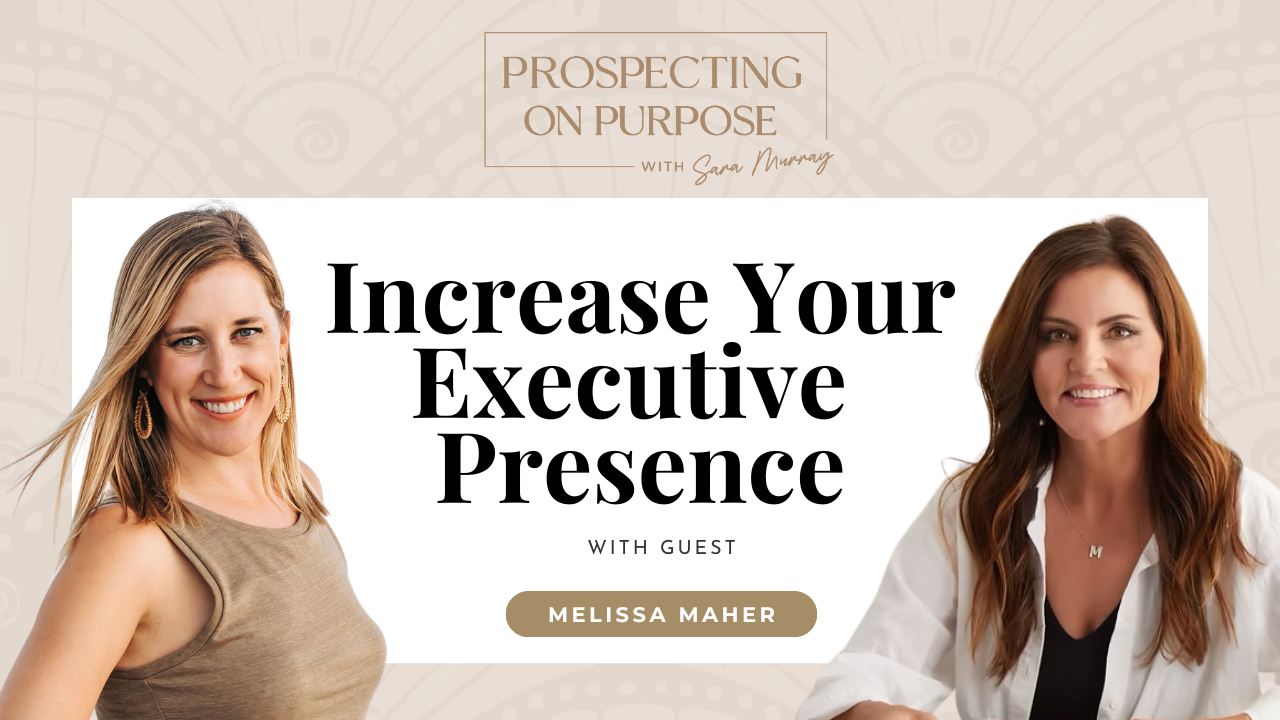
Episode 120: Increase Your Executive Presence with Melissa Maher
Melissa Maher
Melissa S. Maher is an Executive Leadership Advisor, Strategic Consultant, Speaker, and the CEO and founder of Pinnacle Enterprises Group. A former Chief Marketing Officer at Expedia Group, she spent two decades in senior roles leading global teams, driving negotiations, and shaping strategies that influenced the travel industry worldwide.
She creates proprietary leadership programs and advises senior executives, startups, and hospitality brands to strengthen presence, communication, and influence.
Recognized as one of the “30 Influential Women in Hospitality” by Hotel Management and one of the “100 Inspirational People in Travel” by the International Hospitality Institute, she holds an MBA and BS from the University of Nevada, Las Vegas.
New Best Seller status, “Holding Your Own” - speaking, acting and wining in the business .
Watch the episode here
Executive presence is not about being the loudest, most charismatic, or most senior person in the room. It is about projecting confidence, gravitas, decisiveness, warmth, and poise under pressure.
In this episode of Prospecting On Purpose®, Sara Murray sits down with Melissa Maher, executive leadership advisor, strategic consultant, speaker, and founder and CEO of Pinnacle Enterprises Group. Before launching her firm, Melissa spent two decades in senior leadership roles, including serving as Chief Marketing Officer at Expedia Group.
Melissa shares practical insights from her bestselling book, Holding Your Own: Speaking, Acting, and Winning in the Business World, to help professionals strengthen their presence, communication, visibility, and influence.
Whether you are leading a global team, preparing for a high-stakes meeting, building your personal brand, or trying to influence without a formal title, this conversation offers clear strategies you can begin using immediately.
Sara Murray - Prospecting On Purpose®
Melissa Maher is an executive leadership advisor, strategic consultant, speaker, and the CEO and founder of Pinnacle Enterprises Group. A former Chief Marketing Officer at Expedia Group, she spent two decades in senior roles leading global teams, driving negotiations and shaping strategies that influence the travel industry worldwide. She creates proprietary leadership programs and advises senior executives, startups, and hospitality brands to strengthen presence, communication, and influence.
I am thrilled to have her on the show as we discuss her new bestselling business book, Holding Your Own: Speaking, Acting, and Winning in the Business World. Melissa, welcome to Prospecting On Purpose®.
Melissa Maher
I'm so glad to be here.
Sara Murray - Prospecting On Purpose®
I am so happy to have you. I feel so honored that I get to interview the person who wrote the book, and it's just so cool that that's been part of my job. And if you can see on the video, I have bookmarked this entire book because there were so many really strong takeaways and I cannot wait to dive into it for the audience.
So before we start, I would love a quick definition of what executive presence means in the modern business world.
Melissa Maher
Absolutely. Executive presence is a term that people throw around a lot. And so when I started researching and studying executive presence, I came up with a definition that is, it's the ability to project gravitas, confidence, poise under pressure, and decisiveness, as well as the ability to communicate clearly and with warmth.
So that's kind of a lot in that definition, but I feel like it's a really good definition that sums up what executive presence is.
Sara Murray - Prospecting On Purpose®
Yeah, and we'll dive into some of those elements too. Right at the beginning of this conversation, let's dispel some myths too, because I feel like when people hear the term executive presence, they have their own opinion or vision of what that is. What are some of the common myths you see in your work?
Melissa Maher
The most common are that you have to be loud to have executive presence, or you have to be cocky to have executive presence. And that is not what executive presence is. It is really that calm under pressure, that decisiveness, that warmth.
So a lot of people think introverts can't have executive presence. Introverts are the exact definition of having executive presence. So you don't have to be loud, you don't have to be charismatic, you don't have to be braggy.
Really, just think about that calm, that poise, that gravitas.
Sara Murray - Prospecting On Purpose®
Yeah, and I would love, let's double click on gravitas a little bit because I would love for people who don't know what that word is or really how to embody it, how would you describe gravitas?
Melissa Maher
When I think about gravitas, I think about confidence. I think about poise. I love the word poise for some reason. As I mentioned, decisiveness.
Sara Murray - Prospecting On Purpose®
Mm-hmm.
Melissa Maher
Gravitas is also having emotional intelligence and it's having really strong communication skills. So kind of all of that bundled together is what I would, what I would classify gravitas as.
Sara Murray - Prospecting On Purpose®
And what are some practical steps that people can take if maybe they're weak on decisiveness or maybe communication's a pain point, what are some things people could do right after listening to this episode to increase their gravitas?
Melissa Maher
One of the most important is being prepared. If you go into a meeting, if you're not prepared, you are not going to seem confident. You're not gonna feel confident.
So really thinking about those high-stakes conversations and really doing your homework and getting prepared, and also, again, thinking about high-stakes moments. Really thinking about what are the objections that people will have. Let's say you are pitching something, so thinking about anticipating their objections before they even come up, because that will show that you're prepared.
And when those objections come up, you are much calmer and confident because you've already thought about those. I also tell people to know the three things that you want to get across in a meeting as you walk in the meeting, think about those in advance. And then I always think about really super practical things and the power of a pause.
That can really help strengthen your own confidence and really strengthen the confidence the person sitting across from you has in you. So people get really nervous about the pause, but it's really important, particularly when you're answering difficult questions. And then, kind of on those same lines, also think about the pace.
When I think about executive presence, I think about really strong news anchors, and I talk a lot about Lester Holt. He has the pace down. When people lower their pace by 10 or 15%, they just automatically command attention, can command respect.
So those are some simple but practical things that people can think about when they're thinking about confidence and executive presence and gravitas.
Sara Murray - Prospecting On Purpose®
Being prepared, having the objections thought out ahead of time, understanding what three top priorities you want to get out of the meeting, and then controlling your pacing.
Melissa Maher
And really controlling your overall body.
Sara Murray - Prospecting On Purpose®
Hmm.
Melissa Maher
When you think about communication, about 55% of communication is our facial expressions and our body language. So if we can control our body language, then that really helps make us feel more confident and come off more confident. So thinking, you know, when you're going to do a presentation, planting your feet down, even if you're on Zoom, planting your feet down because that makes you feel more grounded and really using your body to help with that confidence.
Sara Murray - Prospecting On Purpose®
You know, one time I was in a meeting with a lot of peers and it was a seated meeting. It wasn't a presentation, but it wasn't super high-stakes, but there were some heavy hitters in the room, and I had leaned back in my chair and was just, like, present in the meeting. And later I had two different team members pull me aside and said, you seem so confident, just relaxed in the conference room.
And it was interesting feedback because now sometimes I'll find myself like tense in a room and I'm like, you know, just sit back a little, like straighten your shoulders. It's okay. But it does take practice.
And I think that's one of the things that really resonated with me reading your book, but also your work is that you talk about influence and leadership, communication, like, confidence. These are learned skills and people bucket them in these like soft skills. They don't come naturally to a lot of people.
They take continuous work, and I think that's what's so important about the work that you do.
Melissa Maher
Aw, thank you. It's really why I wrote the book because, when I think about those skills, I call them critical skills. They're not skills that you learn on the job.
Your boss never pulls you aside and says, let me tell you how to advocate for yourself, or how to drive your influence or your personal brand. So you just learn those things through whatever resources you can get. But normally it's not on the job.
So that's why I wrote the book, because those skills are so critical. And you think about executive presence, there's a study that was out that says 67% of executives say that executive presence is important when they're promoting someone. So looking at executive presence, they're not looking at their, you know, technical skills.
So those skills are really important and help us get promoted, help us influence, all those important things while we're on the job.
Sara Murray - Prospecting On Purpose®
I think that's what I really enjoyed about your book too. Because of your background, you are uniquely qualified with a lot of your billion-dollar negotiations with global companies. I mean, she is a very humble leader, listeners, because I feel like when you read her book, you can just feel how high-stakes some of these negotiations are.
But then in the next chapter, she's teaching you how to write an email that communicates clearly and gets your point across. So there's a lot of like really meaty tactical elements in the book, and I think that's one of the reasons why it hit bestseller status because people are realizing, wait a second, I can flip to a chapter and immediately increase my executive presence. So kudos to you because I just got so much out of it.
I would like to talk a little bit about personal branding. You mentioned And you had a line that it's not a nice-to-have anymore. It's a strategic necessity.
Can you speak a little bit more to that please?
Melissa Maher
You know, a lot of times people think that personal branding is bragging or it's being aggressive, and it's really not. I say it's a strategic necessity because it's really about your professional positioning. Today's environment, you know, it's very fast-paced.
It's very competitive, and hard work alone doesn't really get you there. It's really not enough. So decisions about promotions and stretch assignments and high-visibility opportunities are being discussed most of the time when you're not in the room.
So you wanna have that strong personal brand so that when you're not in that room, other people are talking positively about you. And when you think about personal branding, you really want to own your own narrative. You don't want someone else to own it for you.
You really want to create that narrative. And when you create that narrative and you have those words that you use to describe yourself. Other people will start using those same words.
So you're really putting yourself in your own destiny by describing your narrative.
Sara Murray - Prospecting On Purpose®
Okay. I love how you unpacked that because that to me is a very strategic approach to it and I work with a lot of men in my work, and we do have a section on personal branding as it speaks to confidence, because you wanna approach a decision maker and you wanna make sure you're adding value to that decision maker, but I love that you brought it full circle with the visibility impacting both the internal stakeholders that you have to influence and the external. What are some tips that you could share for if people wanna increase their visibility? what are some of the tactics you would give us?
Melissa Maher
People get nervous when they think about increasing their visibility or putting themselves out there, but it really is important because the more visible you are, the more opportunities that you get, the more your network expands. So you really do need to think about ways, and I tell people to start small. You know, if you want to do a speaking engagement, well start by giving a toast at a cocktail party.
So really start small to build your confidence. Speaking engagements are a phenomenal way to build your visibility. And again, start small.
Host a small round table before you get on stage in front of a couple hundred people. And post on LinkedIn. Most people are really nervous to put themselves out on LinkedIn.
But if you have a position on a thought leadership topic, put yourself out there. Stretch assignments are a great way, particularly if you're younger in your career, to get that visibility to meet your network. And networking is also a really good way to build your visibility and build your network because if you have a strong network, you are gonna have more opportunities.
Sara Murray - Prospecting On Purpose®
I love that. You had also shared an example of volunteering to present on a team meeting. There are a couple of meetings that I run with my clients and if any one of them were to come to me and say, Hey.
I wanna present this tip that I learned at a training we did last week. Like, I would be thrilled. So I like that you give these examples of, you don't need to go deliver a keynote, but maybe you share an update on a company town hall or volunteer to present.
There's just so many good little tips to help build these muscles.
Melissa Maher
It's really interesting. One of the things that I find is super easy to create visibility is… If you're on a town hall, for example, ask a question. If you're on a town hall and you ask a question, start by introducing yourself.
Because everyone in the room may not know you, or everyone on the zoom may not know you. So it's an easy way to drive visibility, introduce yourself, and then ask the question. So just simple tips like that, I have throughout the book, of ways to, you know, increase your visibility.
Sara Murray - Prospecting On Purpose®
I love that and I really appreciated that it's not about being braggy like you talked about. It's not about, look at me, look at me, because that's not executive leadership, but it's. Here's who I am and what my point of view is.
Say my name when I'm not in the room. And you had a, you have so many different chapters on different topics that would be helpful. I made a joke before we started recording that this could be a 10-episode miniseries at this point, because there's like stakeholders and negotiations and you had made a comment about stakeholders and the quote really stuck out to me.
You know, stakeholder management isn't about influencing your boss or your executive leaders, but it's about keeping everyone else from blocking your progress. And there's so many layers to that. So I thought that was really clever.
Do you wanna speak to stakeholder management a little bit?
Melissa Maher
Stakeholder management is one of those skills that people kind of forget about. People think about managing up. When I think about stakeholder management, it's really managing up, managing across and managing down, and it really is keeping people informed and in the loop to help you succeed and get things done.
Whatever you need to get done, and it can be just about updating stakeholders, it can be as easy as no update this week. But once people see, you know, no update is an update. So really thinking about those stakeholders and thinking about how you can keep them informed, how you can get them on your side, and really managing those stakeholders.
And I think one of the important things with stakeholders is: communicate with stakeholders the way that they wanna be communicated to, particularly as you go up and as you go higher up. For example, CEOs use less words. People on your team underneath you might want to use more words or be more personable.
So really adjusting and mirroring your communication in the stakeholder environment is important.
Sara Murray - Prospecting On Purpose®
Well, there's a couple threads I wanna pull there. The first is, you know, you're talking about going laterally or across different teams. That's gonna help your visibility too, because they're gonna realize, ooh, this is someone who really communicates.
This is someone who's proactive. But then you also talk about flexing to the communication style of the person you're trying to communicate with. And you know, my background's sales, a lot of the conversations around this podcast are sales-focused.
That is such a crucial point that so many people forget and they'll send really long emails that people just delete. Or there's a couple of things that you list in the book that decrease your executive presence, and one of them was rambling, and that's something I've been seeing and I'm guilty of it too, but I've been on the receiving end of a rambler. And it's painful.
You have to really focus to try to listen to what do you need from me right now? What's the point you're trying to get? So if someone's listening and maybe they're guilty of being a rambler, what advice would you have for them to get to the point quicker.
Melissa Maher
My advice would be: use the headline. In the first two sentences, get out there what you want. And really cut the filler, cut stuff that people don't need to know.
You know, a lot of times people over explain and they give so much detail in the background, and that's when people zone out. So really think about your audience and what do they need to know and what is that headline, in the first sentence, or the first two sentences, that you wanna get out there?
And, you know, people have very short attention spans and people these days are skimmers. If we open two emails and one is a ton of paragraphs and long and long, and the other is very short and concise, the short and concise one is gonna be the one that most people will read and they will take action too. So really thinking in advance of what you wanna get across is important.
Sara Murray - Prospecting On Purpose®
Well, it's funny we're talking about stakeholder management and not letting people, you know, block our progress. We're blocking our own progress in that sense because we're sending these long emails that people don't understand what's required from them, so they just don't respond. And it probably dings your executive presence.
Melissa Maher
One other thing that I do, and it's kind of dorky at times, but for email purposes, I will read emails out loud before I send them.
Sara Murray - Prospecting On Purpose®
That's a good tip.
Melissa Maher
I always tell people, you know, act like an attorney. An attorney will say, if you can say it in five words versus 15 words, say it in five words. Sales and marketing and communications people, we like a lot of words, but really when you wanna get clear communication, think like a lawyer and cut down as many words as you can, and reading out loud absolutely helps that.
Sara Murray - Prospecting On Purpose®
I love that. That's a good tip. The other thing that resonated that I see a lot and I am guilty of is apologizing. The "I'm sorry" storm is in every conversation every day now. Can you give us some tips if people are apologizers?
Melissa Maher
Yeah, so it's funny, we are just, by human nature, we're inclined to apologize. We're inclined to say, I'm sorry, and sometimes we're just doing it because we're nice. But when you say I'm sorry all the time, it diminishes your presence.
It diminishes the confidence that other people have in you. So really just think about small ways to reframe. You can say, you know, I'd like to reschedule the meeting.
You don't start by saying, I'm sorry, I have to reschedule. So just small language adjustments or something as simple as, say "apologies" versus "I'm sorry," and you know, just reframing some of those words really, really helps with that.
Sara Murray - Prospecting On Purpose®
I was at a grocery store the other day and it was Christmas time and it was packed and everyone's in this aisle and we're all apologizing to each other and no one's doing anything wrong.
Melissa Maher
Right?
Sara Murray - Prospecting On Purpose®
We're just standing near each other and saying, sorry, sorry, sorry. It's like, time out, people. Right?
And so I appreciate that you're leading the charge on this. I'll be part of the spreading the gospel. Like we only apologize if we truly have something to be apologetic for, but otherwise we can remove the sorrys from our vocabulary.
Melissa Maher
Absolutely.
Sara Murray - Prospecting On Purpose®
I appreciate those tips too. One of the other things that I wanted to ask you about was executive presence over Zoom calls and doing a meeting in person. So we have obviously the body language piece, the tips you shared at the top of the interview.
But more and more meetings are conducted on Zoom, and I think there are some areas where people struggle with showing that presence and confidence digitally or virtually. What advice would you have for us there?
Melissa Maher
I think sometimes meeting over Zoom, it is actually more important to focus on your executive presence because it's easy for us to forget to sit tall, you know, we're in our own environment. We relax more, when we roll our eyes, people can see it. So my tips would be: make sure you have your camera on.
That sounds so obvious, but when someone doesn't have their camera on, the other people in the meeting almost forget that they're there. So camera on, get to the meeting on time or early and really make sure that your presence is known. So when you're on Zoom, also think about asking questions.
Almost go a little bit overboard in your involvement in the meeting and really watch your body language. Watch your facial expressions. As I said, we tend to be a bit more relaxed when we're in our own home environment or we're on the road, we're in a hotel room.
So really just think about your body language, your presence, have eye contact. It's hard to have eye contact on Zoom, but really think about that eye contact. And just think about, you know, all of your surroundings.
Do you have good lighting? If you have clutter in the background, people are gonna focus on the clutter in the background. I was on a Zoom call during the pandemic and this is when I was still at Expedia, our CFO was doing a call from his bedroom and the bed was unmade, the closet door was open, there were suits hanging from the closet door and sweatshirts on the ground.
And I remember thinking, wow, he seems so unorganized just by his background on Zoom. Clearly he's not unorganized and he's a very successful man, but if I didn't know him, that would be my first impression is he's unorganized and messy.
Sara Murray - Prospecting On Purpose®
Right. When I travel and have to take a meeting from a hotel room, I will full on turn the desk, like I hate seeing a bed in the background. And you join calls and people have got their, you know, their chin shot or their nostril shots.
Guys, there are solutions to this. So I'm happy you said it because I think it's an area where, especially as we wanna be taken more seriously, like, I wanna prioritize my background because that's part of what people get when they work with me. And I also like the tip on camera on, because it's just respectful too.
It's not only that people forget you're there, but people assume you're multitasking unless you're walking. You know, we don't want the Blair Witch project background and motion sickness. But the other point you made about being vocal in the meetings, I work with a lot of different teams and I'm working with a team right now and there's a more junior team member, but he is so engaged on our online calls that I called him the other day.
I said, you are a rock star, rising star. Your leadership skills are shining through, and it's just because you're chiming in, you're adding value, you're not leaving anyone hanging. And I think there's a lot of different ways to influence without authority and show our leadership style even if we don't have a title.
And so I would love to talk about that with you a little bit and we hit on it with the stakeholder management, but if somebody doesn't have a title, how can they still be a leader and influence up?
Melissa Maher
If someone doesn't have a title, they shouldn't let that get in their way. If someone doesn't have a title, they should really focus on how do they build their network? How do they build their allies and sponsors and mentors, So if you're more junior, then think about people in your organization or in the industry that can help you shine and grow and develop.
So really get to know people. I always say have a posse, which is kind of three to five people that are your support system, but also have a Posse Plus, which is eight to 10 people that are kind of the next layer beyond that. So if you're junior and you are building that strength of Posse and Posse Plus, that can help you build your influence because you're expanding your network.
And so don't be afraid to ask for a one-on-one meeting with someone more senior. Don't be nervous to ask for a stretch assignment in another team, or even outside of the company because that will really help with your influence and building your personal brand and help you if you don't have a title.
Sara Murray - Prospecting On Purpose®
I love that. I love that example. And I think the most impactful chapter for me was your chapter on negotiation, because I think this is an area where there's a lot of definitions of negotiation, but this is an area where I think people shrink and get really fearful and they don't realize that we're negotiating all the time in our everyday lives.
The chapter title was "Negotiation Is Not a Battle, It's a Dance." So let's talk a little bit about some of the negotiation tips that you share.
Melissa Maher
I think the biggest thing about negotiations is that people think it's negative, and so that's why I call it a dance because it really should be positive when you're aiming for something where both parties get something good out of it. You never wanna go into a negotiation and think, I wanna be the winner. You wanna go into a negotiation thinking, what are we solving and how can both sides get something out of it?
And I think from a negotiation standpoint, one of the biggest tips that I give people is, get to know the person on the other side. If you're negotiating with someone, understand what are their needs?
What are their wants? Not just the business opportunity, but take time to get to know them personally, because when there's trust, a negotiation is gonna go much better. So a lot of times people think it should be a battle, and we don't wanna get to know the person.
But if you make it a dance and you get to know the person, you get to know their needs, their stakeholders' needs, then it really helps with that negotiation. And I talk about this in the book. I remember my first negotiation overseas.
I was tired, jet-lagged, just got off the plane and was going to have dinner. And I said to my VP at the time, gosh, I'm so tired. I don't wanna have dinner.
He said, no, this is part of getting to know these clients. Sitting down and having dinner with them is part of their culture. And so I did, and I remember that moment because it was such a changer in the negotiation because I got to know them more personally over dinner.
So when we went into the negotiation the next morning, it was more of a dance and less of that battle. So really getting to know the people is important.
Sara Murray - Prospecting On Purpose®
I like that and I think when you go in with that mindset too, you're not just focused on yourself and your agenda because that gives away your power, sometimes, I've noticed. Like if you, especially in sales, you're trying to lead your prospect to a closed sale, and if you go in with your own agenda and don't find out what's important to them, you're never gonna win. Everything is a negotiation.
Melissa Maher
And I think if you think about a negotiation as more of a positive than a negative, just that mindset alone will help too. I also go back to one of my main negotiation tips: prepare, prepare, prepare. You don't want to go into a negotiation and wing it because you will seem like you are winging it.
So really prepare for a negotiation as well.
Sara Murray - Prospecting On Purpose®
Well, Melissa, when I was reading that chapter, in 2019 I lived in a fourplex in Los Angeles and it was a rent-controlled building and we got a no-fault eviction, so nobody did anything wrong, but there was a new owner and he was taking it off of the rental market and you have to give the tenants some money because you're no-fault evicting them. And he wanted us to move out earlier and he was gonna give us more money to move out earlier, but we all had to agree. And I went to my neighbors and I said, I work with commercial contractors.
Let me negotiate on our behalf. And I found one article about this new law that was letting us be evicted. And I did my research and I called my tax guy and I wrote out a whole little script and I did a power pose and I put my phone on Do Not Disturb and I called him and he had done no research.
I seemed so prepared for my one article and my call to my tax guy that he just folded and we all got a lot of money to move. And it was so funny because I was the youngest tenant, I was a female, and you could tell he didn't even give me a time of day. And I've noticed when people underestimate you, they give away a little bit of their power.
They expose a little bit of their side of it, and I find it kind of fun now. So I like the idea of looking at it as a dance and the ability to make it a positive. Because his goal was to get the tenants out.
So even though he had to pay more money, I helped him with his goal of getting the tenants out. So it ended up being a win-win for everyone.
Melissa Maher
That's great. I love that story. I love that.
Sara Murray - Prospecting On Purpose®
Well, and it was scary, but after that one I was like, okay, I can do the next one. So I would love to learn too: do you have any like tips or strategies on how to increase your confidence outside of being prepared?
Like any fun little behind the scenes things you do?
Melissa Maher
Well, I do a lot with my body and making sure that my body feels confident. So before a podcast or before a big meeting, I will get up and stretch and do the power pose. I also think what helps with me is just breathing and really taking those breaths and not just because I'm a California girl now.
Breathwork is incredible at increasing your confidence because it slows down your nervous system and it really grounds you. It makes you feel more confident. So I'm a big believer in that.
Those are things you can do to make yourself feel better. I've talked a lot about being prepared, but when you are prepared, then you are more confident. And when you seem more confident, the person on the other side actually trusts you more.
There's a lot of research on that, so really thinking about ways that can help you with your confidence. We talked about the pause. When you are nervous and you pause, you can collect your thoughts kind of quickly.
A lot of times when people are nervous, they talk really fast and they just wanna get the words out and when they talk really fast, they don't seem confident. So that's really where I think the power of breath and the power of pause really helps you to collect your thoughts and really to be more confident in what you're saying.
Sara Murray - Prospecting On Purpose®
I love that. I had a boss once, and I would struggle with clients being upset at something that I told him a year ago was gonna happen and they didn't listen. And then it happened and I'd get the screaming phone call.
And one of my bosses at the time shared with me, just focus on the facts. You know, just state facts because then it's harder to argue with facts versus emotion or opinion. And the other thing he told me was to pause.
Because he said they'll fill in the blanks on their own and they'll feel your disappointment in them in the pause, because I'm not gonna yell back at anyone. That wasn't my style. But the pause did help me feel able to navigate through that conversation.
So I like that you shared that.
Melissa Maher
The pause is so powerful and I think people underestimate it, along with talking slowly. When you talk slow, what happens is your brain thinks, wow, I'm talking so slow. But the other person doesn't think you're talking as slow as you think you're talking.
So the pause and the pace are really important when it comes to feeling more confident.
Sara Murray - Prospecting On Purpose®
Great. And you know, as we're wrapping up the interview, if you were to have maybe three main takeaways that you would want our listeners to leave with. What are three things that they can start doing outside of all the tips you shared?
What are three things they could start doing now to really increase that confidence in their executive presence?
Melissa Maher
Ooh, that's a fun question. I would say first: put yourself out there and be visible because if you put yourself out there, you are going to get more opportunities. You are going to get those stretch assignments.
So really be visible would be my first one. My second one: elevate your personal brand. A lot of times people won't focus on their personal brand until the end of the year, or, you know, an evaluation.
But really, when you're enhancing your personal brand, you're thinking about it more regularly and you're putting time into it. So figure out what you wanna be known for and really think about that all year round, not just the last week in December. And then thirdly, I would say build your network.
Really think about your support system. Really think about people out there in your industry or your company, think inside your company and also outside of your company. But think about people that will lift you up, that you can go to for introductions to other people.
I think there's so much value in having a strong network that that's absolutely something that people should be focusing on. It's funny, I got an email yesterday from someone who will remain nameless, and I have not talked to this person in probably six years, and this person reached out to me and said, you're one of my mentors and I wanted to get in touch with you. I just lost my job, blah, blah, blah.
Well, don't wait six years. Don't wait five years. If someone is in your network and you consider them as a valuable person, stay in touch with them.
No, you don't have to have lunch every week, but stay in touch with them. So once you've built your network, make sure that you're working your network and staying in touch with your network. That was a long answer for my three.
Sara Murray - Prospecting On Purpose®
No, no, that was perfect. So be visible, and I think you did a really nice job articulating why that's so valuable. And then build your personal brand because those do go hand in hand.
And I like you framed it as, what are people saying when you're not in the room? Are people even saying your name when you're in the room? If you're floated for a promotion and other team members say, I don't know who that person is.
Like they go hand in hand in a lot of ways. But then the networking piece is so valuable too. And you shared it in your stakeholder savviness, your stakeholder management, having your inner circle, having the sponsors, having your Posse Plus, like building that out.
Because everything intersects with each other. All of the things you're saying are little pieces to the puzzle that build to really what your ultimate goal is. And I think what I really love about you, Melissa, is you're so intentional.
You make it look easy and fluid, but you're very intentional about where you're going. And I think that's a lesson we can all learn from.
Melissa Maher
Yeah, you have to be intentional. Intentional in building your brand, intentional about building your relationships, intentional about what you want, and speaking up for yourself. So it really is about being intentional and kind of driving what you want the way that you want it.
Sara Murray - Prospecting On Purpose®
I love it. Well, and we now have the Bible for it. Holding Your Own.
I was prepared for this meeting, Melissa, because I read the book and I knew how to prepare for the meeting. So I will put the link to the book in the show notes. Holding Your Own is available on Amazon and every other retail platform.
But Melissa, if people wanna work with you or connect with you, how can they get in touch? How can they learn more?
Melissa Maher
Sure, I'm always on LinkedIn, so that is certainly a good way to get in touch with me. Or you can go to my website. I actually have a website for the book that's holdingyourownbook.com.
Or my business website is pinnacleenterprisesgroup.com. So those are the three best ways to reach out to me and get in touch with me. I'd love to hear from any of your listeners if they need anything at all.
Sara Murray - Prospecting On Purpose®
Yes. Melissa is someone who walks the talk and she is really responsive and collaborative and supports others and cheerleads others. And your personal brand, I think, shines so strongly and you're such a nice person for us to emulate and put our own personal twist on it.
So thank you for being a guest on Prospecting On Purpose®. Thank you for lending us your wisdom. Thank you for being my friend, and I'm so happy you were able to join the episode today.
Melissa Maher
Oh, I'm very, very excited to be here. I'm delighted to be with you and I appreciate all the time that you put into your homework. I saw all those post-it notes, so thank you.
Sara Murray - Prospecting On Purpose®
Oh my gosh, I got so much out of it. I cannot wait to continue to put it into practice. Thank you again, Melissa.
Connect with Melissa Maher
Holding Your Own: https://holdingyourownbook.com/
Pinnacle Enterprises Group: https://pinnacleenterprisesgroup.com/
LinkedIn: https://www.linkedin.com/in/melissamaher/
Connect with Sara Murray
YouTube: https://www.youtube.com/@saramurraysales
LinkedIn: https://www.linkedin.com/in/saramurraysales/
Instagram: https://www.instagram.com/saramurraysales/